


The Ponds

May 2026

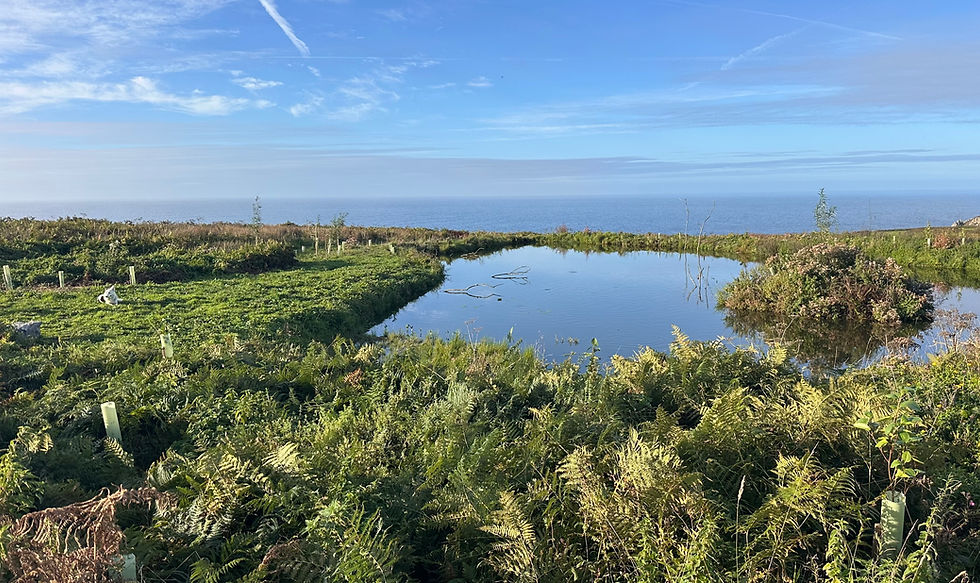
Ponds are one of the most effective ways to boost biodiversity. We created three small ponds alongside the track to the cove in March 2025 and then two larger ponds with small islands a year later. Two, we planted and stocked with native species, the others we left to allow slower natural colonisation.
The rarest type of pond in the UK, owing to most having been drained and filled, is a ‘liminal’ pond - those ponds that always appear to be in a transitional state - ponds that dry out in a hot summer, but then fill with winter rainfall. As habitats which undergo constant change, they have a unique flora and fauna and are especially important for breeding amphibians. In part this is due to a lack of aquatic predators.
Our liminal pond beside the track was thick with tadpoles this spring, proving that the local toads found it and approved.
Toad numbers have declined dramatically in the last decade - it wasn’t long ago that you could go out on a warm, damp evening in March and listen to a cacophony of male toad song - no longer, sadly. Hopefully the new ponds will help redress that.
Possibly the most exciting new visitors to the ponds have been otters! I’ve not seen otters, or any sign of them, in the valley in the thirty years I’ve lived here. In the space of a couple of weeks this March though we identified four individuals - a female with two half-grown cubs and a large dog otter that was photographed by a camera trap at the ‘Corner Pond’. That pond had been stocked with fish last autumn. I was interested to learn recently that while large fish are the preferred diet, otters are quite eclectic in their taste - with mammals, birds, amphibians and even aquatic insects making up a good proportion of what they eat. The size of prey is very variable - while a fat carp is obviously preferable, small fish like sticklebacks, bullheads and gudgeon are all hunted and eaten.

We’ve planted the pond surrounds with a mix of grass and wild flower seed - specifically for acidic soils and pond-edge habitat. While the ponds look quite bare at the time of writing ( mid May) the seeds are beginning to germinate and by next year they should look much more ‘bedded’ into the landscape.
The Corner Pond looked the same a year ago, but it now has water lilies, bog bean, flag irises and fringed lilies all starting to flower.


The excitement with natural ponds is that you are never quite sure how they’ll turn out or what they will attract. The Big Pond hasn’t fully filled yet - that might take more rainfall than we’ve had recently. Hopefully though it will take much of the water that used to run down the track in winter and instead, release it slowly into the surrounding wetlands.
Within days of the pond being finished, a pair of Canada geese took up residence and a small flock of dunlin used it as a ‘stop-over’ on their northerly migration.
It’s just the start of a natural story - it will be interesting to see how it develops over the next few years.


Comments